

Glass Pipes Built to Use and Made to Display
Aug 18th 2026
There's a version of this story a lot of people know. You buy a glass pipe because you need one, it does its job, and eventually it ends up in a drawer or a bag somewhere until the next time you need it. Functional, forgettable. That's how most glass works, and there's nothing wrong with it, until you see what glass can actually be.
The glass pipes in our World Class Glass collection aren't built for drawers. Artists like Karma, Robertson, Scoz, JDZ, and Anthony Roe make pieces we've personally vetted, pieces that pull double duty. You can use them, and you can display them, and most of our customers actually want to do both.
What Are You Actually Looking for in a Glass Pipe?
Most people shopping for a pipe are running one of two mental checklists. Either they want something that works well, good airflow, solid build, easy to clean, or they want something that looks incredible sitting on a shelf and stays there. The assumption is that those two things don't live in the same piece, that you have to pick one and live with the compromise.
That assumption falls apart fast when you're holding real quality. The best glass smoking pipes feel different in your hand before you even use them. There's weight to them, intention, a sense that the person who made it cared about more than clearing a production target. Borosilicate glass pipes start with the same heat-resistant, lab-grade material used in scientific glassware, which means you're not holding something fragile or decorative. Borosilicate handles thermal stress the way cheap soda-lime glass never can. Run warm water through it between sessions, take your time, and you won't see hairline cracks appearing where the glass couldn't handle the temperature change.
Handblown glass pipes add another layer to that. Each piece gets individual attention at every step of production, and the walls are consistent because someone made them that way on purpose, not because a machine pressed them into a mold. You can feel that when you use the piece. You can see it when you put it on display.
When Glass Pipes Earn a Spot on the Shelf
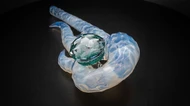
We carry pieces that stop people mid-conversation. The JDZ x Chaka Ice Lock is that kind of piece. It's a collab between JDZ Glass and Chaka, and the blue and white swirls on it look like something genuinely frozen, not just painted on. They pick it up. They turn it over. They ask where you got it and if there are more. There's a conversation that happens around artist-made glass that doesn't happen around generic gear, and a lot of our customers tell us that's a big part of the appeal.
We chose the glass pipes in this collection because they pass both tests. You can use them regularly and they're going to hold up, because that's the functional baseline we require before anything ends up on our site. Artists finish them at a level that makes them worth looking at when they're clean and sitting in your display case. People who work at this level are thinking about the full lifecycle of a piece, not just its utility.
Percolator glass pipes make the merging of function and design pretty obvious. A perc isn't just a filtration system. It's a structural element that changes how a piece looks, and the bubbling action through a well-made percolator chamber is its own visual thing. When an artist builds that chamber into a piece with real intention behind it, you end up with something that's interesting to watch in use and interesting to look at when it's sitting between sessions.
CBD Accessories That Actually Make the Display Case
We work with our artists directly, which means we know exactly what goes into each piece before it shows up in a product listing. That's not how most CBD accessories work at this price point. You're usually looking at an import, something stamped from the same template dozens of times, carrying a brand name that doesn't say anything meaningful about the actual glass.
Water pipes for CBD are a category where this distinction becomes obvious quickly. If you're using CBD flower or hemp-derived products with any regularity, you're running your water pipe often, and the wear shows fast on pieces that weren't built for it. The quality difference between a vetted borosilicate piece and a random budget option becomes clear fast. The seals hold. The joints fit without forcing. The percolation is smooth because whoever made the piece designed it that way, not because it cleared a minimum threshold somewhere in a production line.
Dab rigs glass from this collection takes that further. When Scoz works a piece with that level of sculptural detail, or any of our artists builds out a full cycler rig, what you're getting is a rig a serious concentrate user can run every day and a collector can display without apology. Anthony Roe's work lands in that same place. You'd run it as your daily piece without a second thought, and you'd put it on a shelf without feeling like you were wasting it.
Glass Pipes Worth Keeping for the Long Haul
There's a real satisfaction in owning something you don't have to replace. Most people cycle through glass more often than they'd like to admit. Something breaks, something gets lost, something just stops feeling worth using. The glass pipes in our World Class Glass collection don't work that way because they weren't made that way.
When you buy a handblown piece from an artist we've worked with directly, you're getting something built to last and made to be appreciated over time. The glass gets character as you use it. Colors change and deepen in fumed pieces, and you start to notice details you didn't catch the first time. A JDZ or Karma piece isn't static. The sculptural details that caught your eye when you first bought it are still there years later, and they're still catching people's attention when they walk through the door.
A good display case doesn't need a lot of pieces. It needs the right ones. Our glass pipes in this collection earn a permanent spot because they hold up to use and hold up to scrutiny, two very different tests that most glass fails at least one of. Most pieces fail the first test before they ever get the chance to fail the second. These don't, and that's the whole point of what we built this collection to be.
Disclaimer: This content is provided for general educational information only. It is not intended to instruct or encourage the use or processing of any product in violation of applicable law. Hemp and cannabinoid laws vary by jurisdiction and are changing.